

Last Updated: November 2, 2026
Quick Summary
Choose a sleep mask by prioritizing full light blocking, a contoured shape with deep eye cups, and a sealed nose bridge, then confirm it stays put during a five-minute test in your usual sleep position. A sleep mask helps control light but does not treat insomnia on its own.
- Pick a contoured shape with deep eye cups to control light at eye level.
- Look for a sealed nose bridge so light does not leak in.
- Lie in your usual position for five minutes to test fit before committing.
- Choose breathable fabrics like cotton, bamboo blends, or silk to stay cool.
- For persistent insomnia, try cognitive behavioral therapy for insomnia (CBT-I) and talk to a clinician.
Table of Contents
- How to Pick a Good Sleep Mask for Insomnia
- Sleep Mask Materials, Straps and Comfort for Side Sleepers
- Choosing Your Sleep Mask: Next Steps With Lazarkin
- Frequently Asked Questions
How to Pick a Good Sleep Mask for Insomnia
Choosing a sleep mask for insomnia is less about brand and more about what blocks light and stays put all night. At Lazarkin, we've built our range around complete darkness, a comfortable fit, and no pressure on the eyes, because the wrong sleep mask can make a restless night worse.
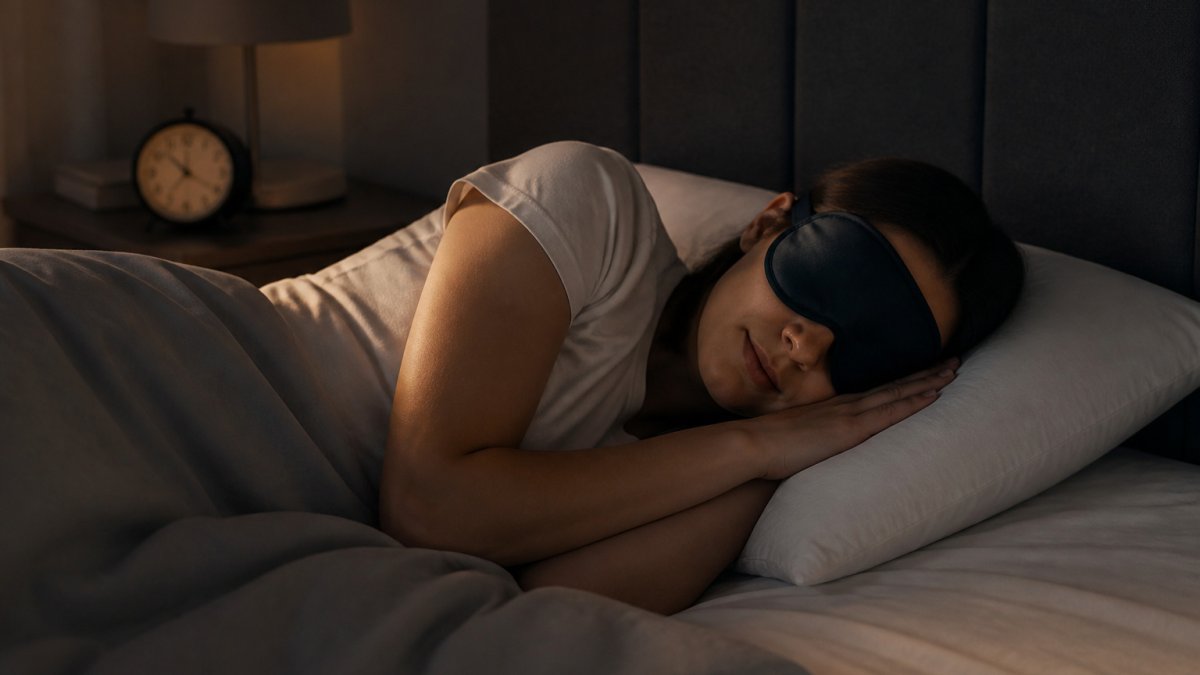
Start with light. National Sleep Foundation sleep environment guidance recommends a dark, quiet and cool bedroom, and a mask is the easiest way to control light at eye level. Look for a contoured shape with deep eye cups and a sealed nose bridge. A practical option is the Bluetooth Sleep Mask With Headphones, which blocks light with a 3D contoured shape and lets you listen to white noise without earbuds pressing into your ears. Before you buy, test fit by lying down in your usual position for five minutes, if the mask slips or presses on your eyelids, it will likely disturb your sleep.

The article's key buying factors can be scanned at a glance:
| Factor | What to look for | Why it matters |
|---|---|---|
| Light | Contoured shape, deep eye cups | Controls light at eye level |
| Nose bridge | Sealed fit | Stops light leaking in |
| Fit test | Lie in usual position for 5 minutes | Reveals slipping or eyelid pressure |
| Bedroom | Dark, quiet, cool | Recommended by the National Sleep Foundation |
Sleep Mask Materials, Straps and Comfort for Side Sleepers
Breathable fabrics like cotton, bamboo blends, and silk stay cooler and wick moisture, while dense foam or synthetic fleece traps heat; memory foam holds shape but insulates.
Side sleepers may prefer a flatter profile. Look for a thin, flexible design with a contoured nose bridge and an adjustable strap.
Choosing Your Sleep Mask: Next Steps With Lazarkin
A sleep mask is not a treatment for insomnia. For persistent trouble falling asleep, staying asleep, or waking unrefreshed for weeks, the evidence-based first steps are cognitive behavioral therapy for insomnia (CBT-I) and a conversation with a clinician.
- Put the mask on in the lighting you actually sleep in and check for leaks at the nose bridge, under the eyes, and along the cheekbones.
- Lie in your usual sleep position for at least ten minutes, rolling from back to side to stomach.
- Check pressure points: no fabric should rest on your eyelids or lashes, and the strap should not leave deep marks or pull your ears forward.
- Tug gently on the strap; if the mask shifts more than a centimeter, it will slip during the night.
- Breathe through your nose for a minute; if it feels hot or damp, a breathable fabric or contoured design will serve you better.
Match features to your environment: streetlights and shared rooms call for maximum light blocking with a sealed nose bridge; shift work and daytime sleep benefit from a contoured mask that blocks light without pressure; travel favors a thin, packable mask with a wide strap; early sunrise is best handled by a deep brow band reaching the cheekbones.
Work through the points above in order: block the light first, then check fit and materials, then confirm you can care for it easily. Lazarkin ships every order from within the EU with free delivery and a 30-day money-back guarantee, so you can run the fit test at home. For more guidance, read How to Sleep Better With Insomnia: A Practical Guide before you decide.
Frequently Asked Questions
Do sleep masks work for insomnia?
A sleep mask can help some people with insomnia, mainly by reducing light that reaches the eyes and signals the brain to stay alert. It will not treat the underlying cause of sleeplessness, such as stress, pain or a medical condition. If sleep problems persist for several weeks, or they affect your daytime functioning, speak to a GP or sleep specialist. Use a mask as one part of a wider sleep routine, not as a replacement for medical advice.
Should a sleep mask press against your eyes?
No. A good sleep mask should sit around the eye sockets without pressing on the eyelids. Look for deep eye cups or a 3D contoured shape that leaves room to blink fully. If the mask presses on your eyes, it can cause discomfort and pressure that keeps you awake, and it may also let light leak in at the edges. Test the fit by lying down and opening and closing your eyes.
Which sleep mask is best for side sleepers?
Side sleepers need a mask with a flat or low-profile design, a thin strap and no bulky electronics that dig into the pillow. The Lazarkin Bluetooth Sleep Mask With Headphones has ultra-thin 11 mm speakers that lie flat enough for side sleeping and a 3D contoured shape with deep eye cups. Choose a model with an adjustable strap so you can avoid pressure points against the pillow.


